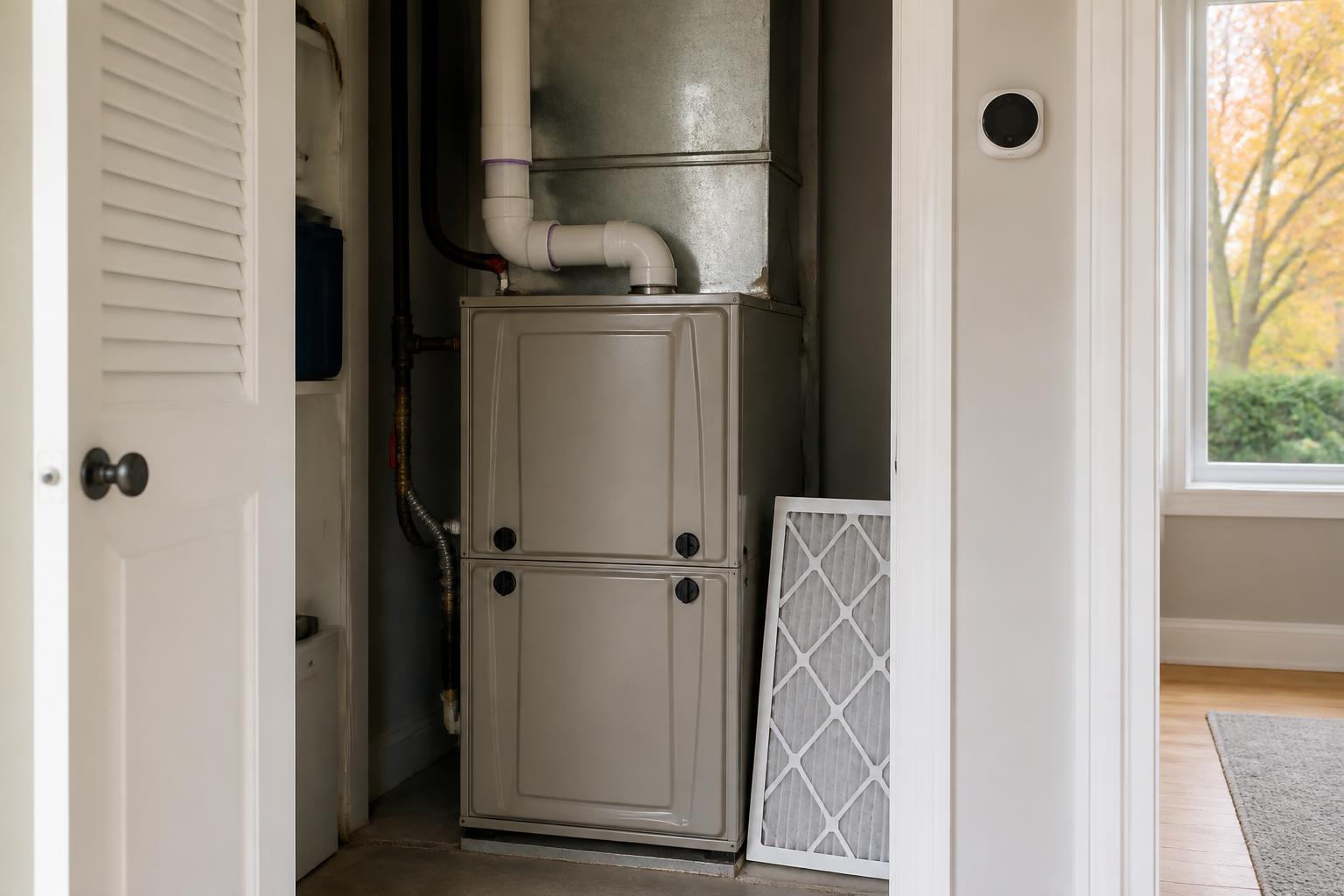
The Ten-Minute HVAC Switch-Over Check Before You Run Heat
Avoid a winter emergency with this 10-minute HVAC check. Learn how to spot hidden issues early, save on energy bills, and ensure your home stays warm all season.
In this article
The equipment in your house that's about to be asked for heat has been sitting idle for six or seven months.
A simple HVAC maintenance Atlanta check before the first cold night can reveal airflow, ignition, heat-pump, or equipment problems while they are still a normal scheduling issue rather than an emergency.
Not off - idle. Dust settled on a heat exchanger. A blower wheel accumulating a coat of grime. Belts and bearings that haven't turned. A flue that a bird may have taken an interest in. Filters that did a summer's work of cooling and never got changed.
Then one night it drops into the thirties and the whole metro asks for heat at the same time, and whatever was wrong becomes wrong at the worst possible moment, alongside everyone else's.
The fix is a test run on a mild afternoon. It takes ten minutes and it moves the discovery from an emergency to an appointment.
Before you touch the thermostat
Change the filter. Not "check" - change, unless you're certain it's recent. A summer-loaded filter restricts airflow, and restricted airflow on heating causes different and worse problems than it does on cooling: a furnace that can't move air across the heat exchanger runs hot, and running hot is what trips safety limits and shortens equipment life.
Note the size printed on the frame before you throw it out.
Look at the outdoor unit if you have a heat pump. Clear leaves, grass clippings, and anything growing within a couple feet of it. Heat pumps run in reverse to heat, meaning the outdoor coil is doing real work all winter. Blocked airflow there is a heating problem, not just a cooling one.
Look at the indoor unit's surroundings. Nothing stored against it. Nothing blocking the return.
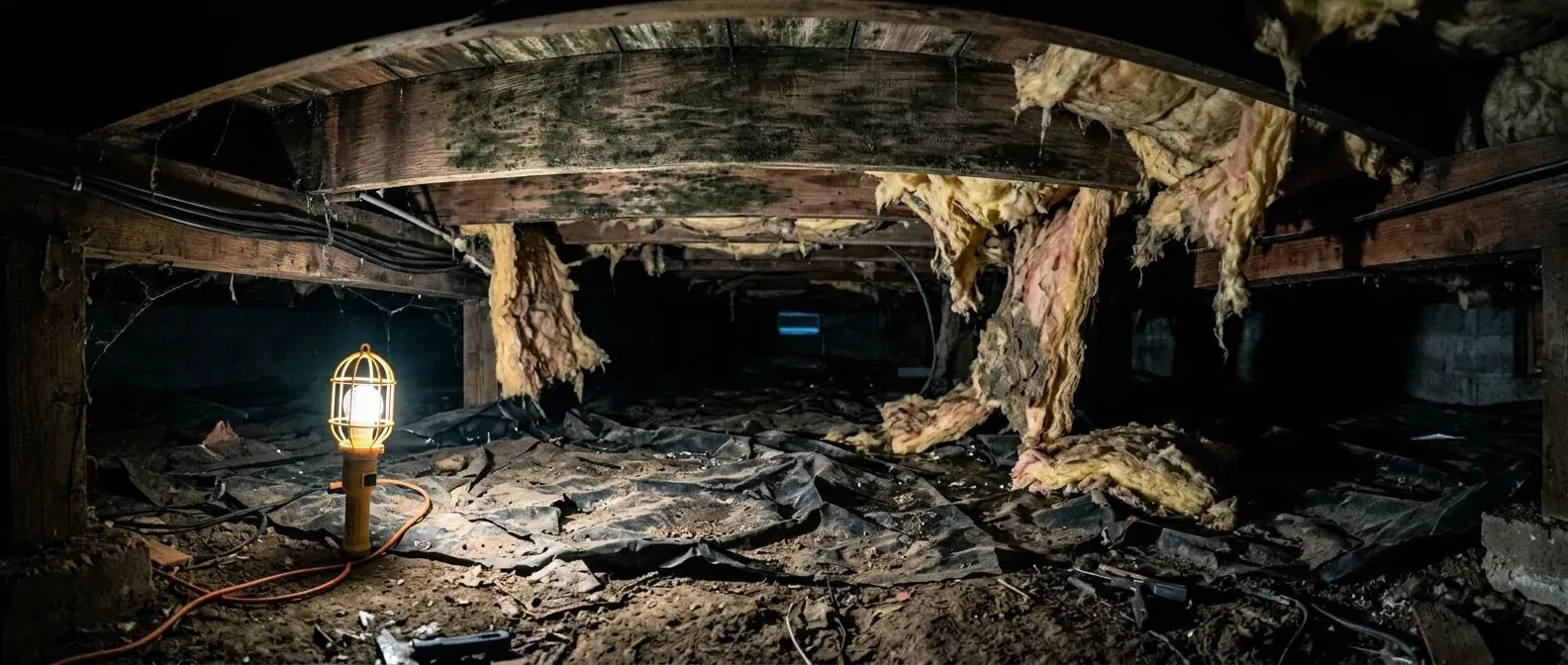
If it's in a closet or attic, look at the floor beneath it for staining - a condensate problem that went unnoticed all summer is a water damage problem you haven't found yet, and it's the kind that shows up as a ceiling stain a room away. If you see staining: Atlanta water damage services.
Walk the registers. Open every supply register and clear every return. Closing vents in unused rooms is a common habit and it doesn't save money - it unbalances the system and raises static pressure.

Run a 20-Minute HVAC Heating System Test
Pick a mild afternoon. Set the thermostat to heat and raise the setpoint about ten degrees above room temperature. Let it run twenty minutes.
First two minutes. You should hear the system start, and in a gas furnace you may hear an ignition sequence. A burning-dust smell is normal - that's the summer's dust burning off the heat exchanger - and it should fade within a few minutes.
What is not normal: a smell that doesn't fade. A sharp, chemical, or acrid smell. A smell like rotten eggs or sulfur, which is the odorant added to natural gas - if you smell that, leave the house and call your gas utility before you call anyone else.
Next five minutes. Air from the registers should be noticeably warm. Grinding, squealing, scraping, or rhythmic banging is not normal. A brief rattle on startup may be a loose panel; a continuous mechanical noise is not.
By twenty minutes. The house should be moving toward the setpoint. Every register should be delivering. The system should still be running, not cycling on and off repeatedly.
Short cycling - starting and stopping every few minutes without reaching temperature - is one of the most useful things this test catches, because it points at restricted airflow, a sensor issue, or a sizing problem, all of which are easier to diagnose in September than in January.

The specific Georgia wrinkles
Heat pumps and auxiliary heat. Many metro Atlanta homes run heat pumps with electric auxiliary heat for cold snaps. Auxiliary heat is expensive to run, and a system that calls for it prematurely or leaves it engaged will produce a startling power bill. If your thermostat shows "aux" or "emergency" heat during the test run on a mild day, that's worth a diagnostic.
Gas furnaces and the flue. Anything that vents combustion gases needs a clear path out. Nests, debris, and blockages happen over a summer.
Carbon monoxide detectors. If you have any combustion appliance - gas furnace, gas water heater, gas range, fireplace - test the detectors before the heating season, not during it. Replace batteries. Note that CO detectors themselves expire, typically after several years, with a date on the unit.
The humidity swing. Heating dries indoor air considerably. That's mostly a comfort issue, but the transition month is also when the opposite problem - the humidity handoff described in the fall transition post - is still happening in unconditioned spaces. Both can be true in the same house at the same time.
When the test says call
Call for a diagnostic if any of these show up:
No heat, or air that never gets warm
Short cycling
A smell that doesn't fade in a few minutes, or any gas smell at all (utility first)
Mechanical noise that's continuous rather than a single startup rattle
Rooms that get no air, or dramatically less than others
A breaker that trips when the system runs
Auxiliary or emergency heat engaging on a mild day
Water or staining anywhere near the indoor unit
The argument for doing this in September rather than reacting in November is scheduling. A diagnostic on a mild week is a normal appointment. The same diagnostic during the first cold snap competes with every other household in the metro discovering the same thing on the same night.
Frequently asked questions
When should I switch from AC to heat in Georgia?
There's no calendar date. When overnight lows are consistently in the fifties and the AC barely cycles, you're in the window. The point is to test before you depend on it, which is a separate decision from when you actually switch over.
Why does my furnace smell like burning when I first turn it on?
Dust that settled on the heat exchanger over the summer burning off. Normal, and it should fade within a few minutes. A smell that persists, or one that's sharp rather than dusty, is not normal.
Is an annual tune-up actually worth it?
For combustion equipment, the safety inspection alone is a reasonable argument - heat exchangers and flues are not things to leave unexamined. For heat pumps, the case is mostly about catching efficiency loss and wear before failure. Either way, September is the right month for it and January is the wrong one.
My heat works but one room is always cold.
Usually airflow - a closed or blocked register, a crushed or disconnected duct run, or an unbalanced system. It's diagnosable and it's a much better conversation to have in the fall.
Should I close vents in rooms I don't use?
Generally no. It raises static pressure across the system and can cause more problems than the small savings justify.
Talk to a pro in your area
The equipment tells you what's wrong on the first run, if you give it a run before you need it. Service Pro Nation connects homeowners across metro Atlanta with vetted local HVAC pros - one call, matched to your area.
HVAC, metro Atlanta: (678) 798-8011
Related service areas: Atlanta HVAC services · Marietta HVAC services · Lawrenceville HVAC services · Johns Creek HVAC services · Smyrna HVAC services · Kennesaw HVAC services · Alpharetta HVAC services · Decatur HVAC services